
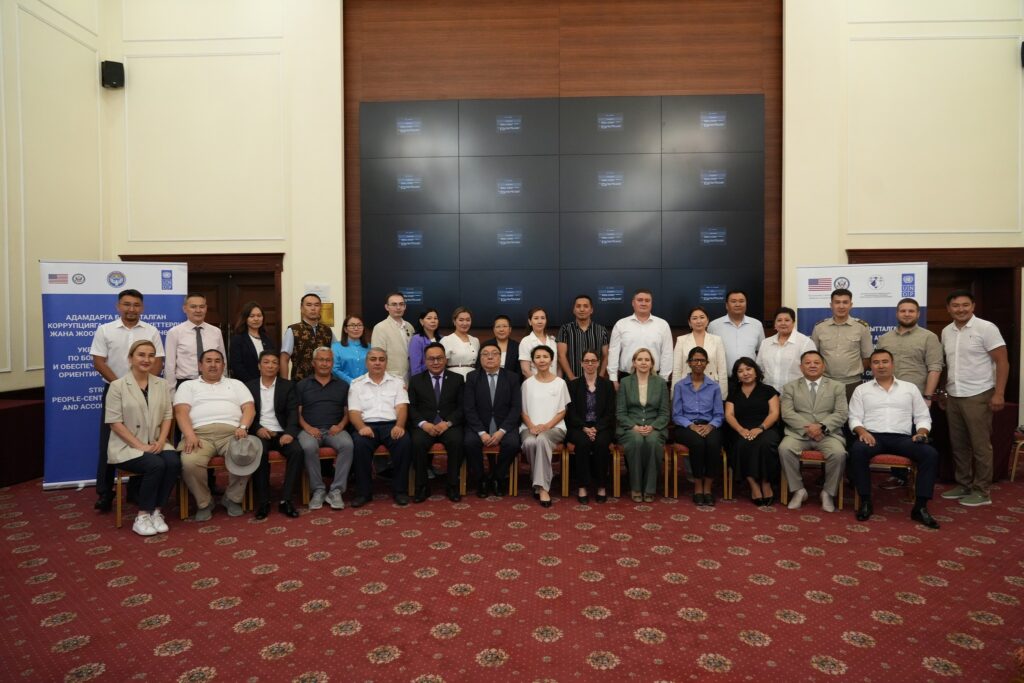
From policy innovation to practical tools, the Kyrgyz Republic is strengthening transparency, accountability, and public trust.
By UNDP Kyrgyzstan
Trust in public institutions is essential for sustainable development. In the Kyrgyz Republic, this principle is driving a new generation of anti-corruption reforms focused not only on enforcement, but on prevention, transparency, and systemic change.
While the Kyrgyz Republic continues to advance its governance reform agenda, further efforts remain important to strengthen institutional coordination, integrity systems, public trust, and the alignment of national frameworks with international standards and good governance practices. In line with the National Development Programme of the Kyrgyz Republic until 2030, the State Anti-Corruption Strategy for 2025–2030, and the Sustainable Development Goals — particularly SDG 16 —, UNDP supported national efforts to advance transparent, accountable, and people-centred governance and institutional resilience.
Through supporting strategic policy and legal reforms, strengthening institutional capacities, promoting evidence-based decision-making and professional development, and fostering innovative anti-corruption approaches led by a new generation of specialists, UNDP contributed to greater integrity, a more effective public sector, and strengthening cooperation between state institutions and civil society.
Milestone 1: Adoption of State Programme and Strategy on Anti-Corruption
A key milestone was the adoption of the State Programme on Anti-Corruption Information Policy for 2026–2027, the first initiative of its kind in the country. By improving how institutions communicate corruption risks and prevention measures, the programme promotes transparency and strengthens public access to information.
At the same time, Kyrgyzstan is enhancing its international cooperation capacities. With UNDP support, the General Prosecutor’s Office developed a Strategy for the Development of International Legal Cooperation (2025–2030), enabling more effective cross-border collaboration, including asset recovery and mutual legal assistance, in line with international standards.
Milestone 2: Innovation on Anti-Corruption Tools
Reform efforts are increasingly supported by innovation and applied knowledge.
Through a UNDP-supported Master’s Programme on Anti-Corruption, a new generation of professionals who are already working on anti-corruption in different parts of the government, academia and expert community,has developed practical solutions to real governance challenges. As part of this programme, graduates have completed practice-oriented theses and gained applied skills in corruption risk assessment, integrity frameworksand evidence-based policy design.
The 17 graduates have also created 13 applied anti-corruption tools that are now being used by government agencies. These tools contribute to improving transparency in decision-making, reducing opportunities for informal practices, and strengthening accountability across public institutions, demonstrating how knowledge can translate into tangible measurable impact.
One example of a new tool launched by the Bishkek Main Directorate of Urban Planning and Architecture is a Telegram bot developed to provide 24/7 access to official urban planning information, reduce bureaucratic barriers and staff workload, standardize responses, improve transparency, and simplify citizens’ access to public services through digital solutions.
Building on these achievements, the alumni students will continue with deploying capstone projects within their home institutions, including risk mapping, open data-dashboards, and integrity training modules. These initiatives directly contribute to implementation of the State Anti-Corruption Strategy 2025-2030’s alignment with SDG 16 and the National Development Programme 2030.
Milestone 3: Investment in People- Whole of Society Approach on Capacity Building
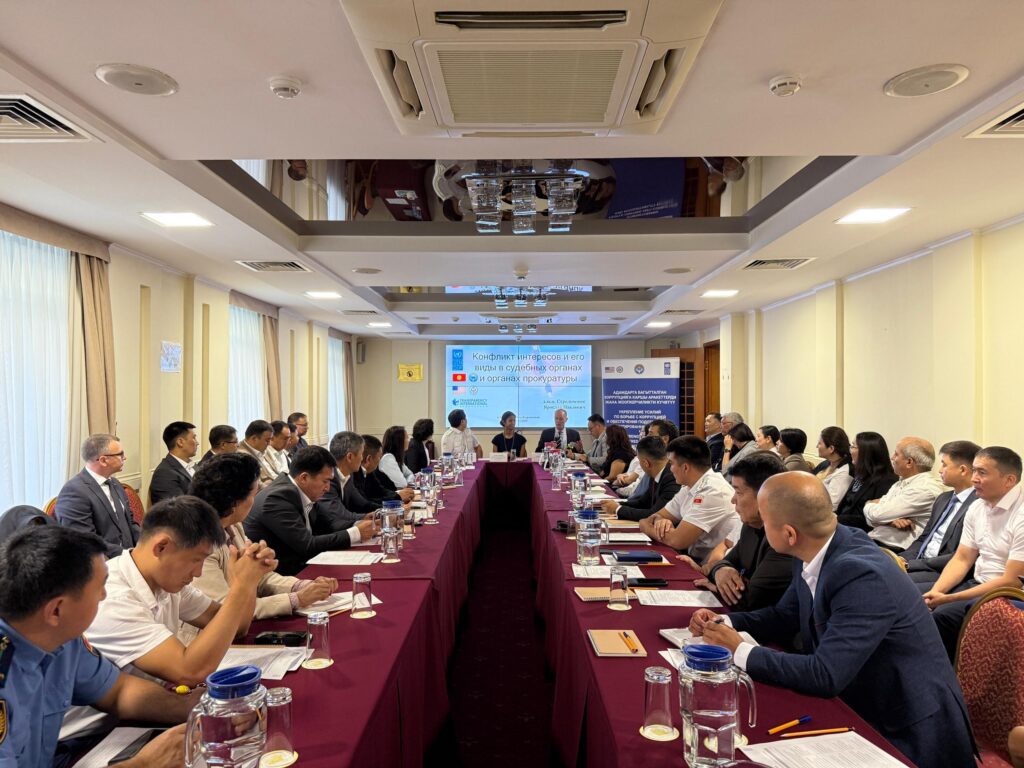
Sustainable reform requires strong institutional capacity. In 2025, more than 280 professionals, including prosecutors, judges, lawyers, and representatives of local governments, academia, and civil society, participated in specialized trainings supported by UNDP.
The trainings focused on preventing conflicts of interest, improving transparency in public procurement, and implementing international anti-corruption standards.
As a result, participants enhanced their skills in identifying and managing conflicts of interest, applying transparent procurement practices, and integrating integrity mechanisms into the daily work of public institutions. They also fostered stronger collaboration between state institutions and civil society, an essential element of effective accountability systems.
From Reform to Results
These combined efforts are beginning to yield results. The Kyrgyz Republic recorded a modest improvement in its standing in the Corruption Perceptions Index (ranking 26th compared to 2024) published by Transparency International in 2025, reflecting gradual progress in strengthening integrity systems.
While challenges remain, the trajectory is clear: a shift toward more transparent, accountable, and people-centered governance.
Building Stronger Systems for the Long Term
Kyrgyzstan’s experience shows that tackling corruption requires a comprehensive approach, combining policy reform, institutional strengthening, and investment in people.
With continued support from partners, including UNDP and the Bureau of International Narcotics and Law Enforcement Affairs, the country is building a more resilient governance system—one where transparency, accountability, and integrity underpin sustainable development.