Whistleblower protection is widely recognized as a cornerstone of effective anti-corruption efforts and accountable governance. Yet in many countries, people who witness corruption still face significant barriers to reporting wrongdoing, from fear of retaliation and concerns about confidentiality to a lack of trust that reports will be acted upon. As a result, corruption often remains hidden, undermining public trust and weakening institutions.
Experience from different country contexts shows that effective whistleblower protection requires more than legislation alone. Safe reporting channels, trusted institutions and credible safeguards against retaliation are equally important. UNDP works with governments and national partners to strengthen these foundations and create environments wherereporting corruption is both safe and meaningful.
An important part of this work is helping countries learn from one another’s experiences and adapt successful approaches to their own contexts. Through its partnership with the Anti-Corruption and Civil Rights Commission (ACRC) of the Republic of Korea, UNDP has facilitated the sharing of Korea’s experience and practical approaches to whistleblower protection with countries and territories, including Uzbekistan, Kosovo1, Mongolia, and Tajikistan. At the same time, innovations and lessons emerging from these countries are informing and inspiring new initiatives across their regions The examples below illustrate how these lessons are being translated into action through stronger whistleblower protection systems and more accessible reporting channels.
Strengthening Whistleblower Protection Systems
Effective whistleblower protection depends not only on legal safeguards but also on institutions that have the capacity to respond to reports and protect those who come forward.
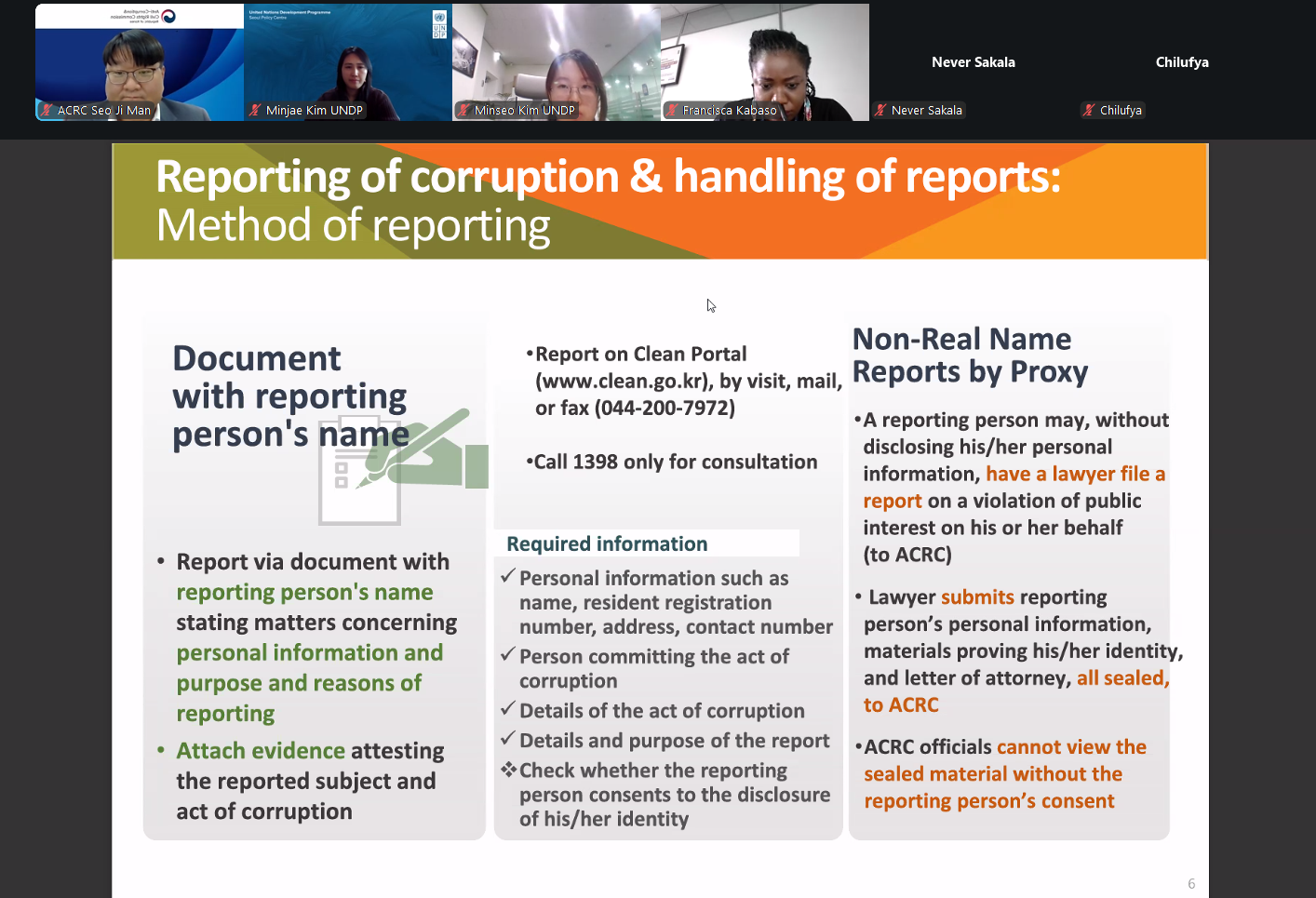
In Zambia, UNDP is supporting the Anti-Corruption Commission to strengthen procedures for handling disclosures, improve coordination among government institutions and raise public awareness of whistleblower rights. Particular attention is being given to youth engagement and public outreach to help foster a culture where people feel safe to reportcorruption.
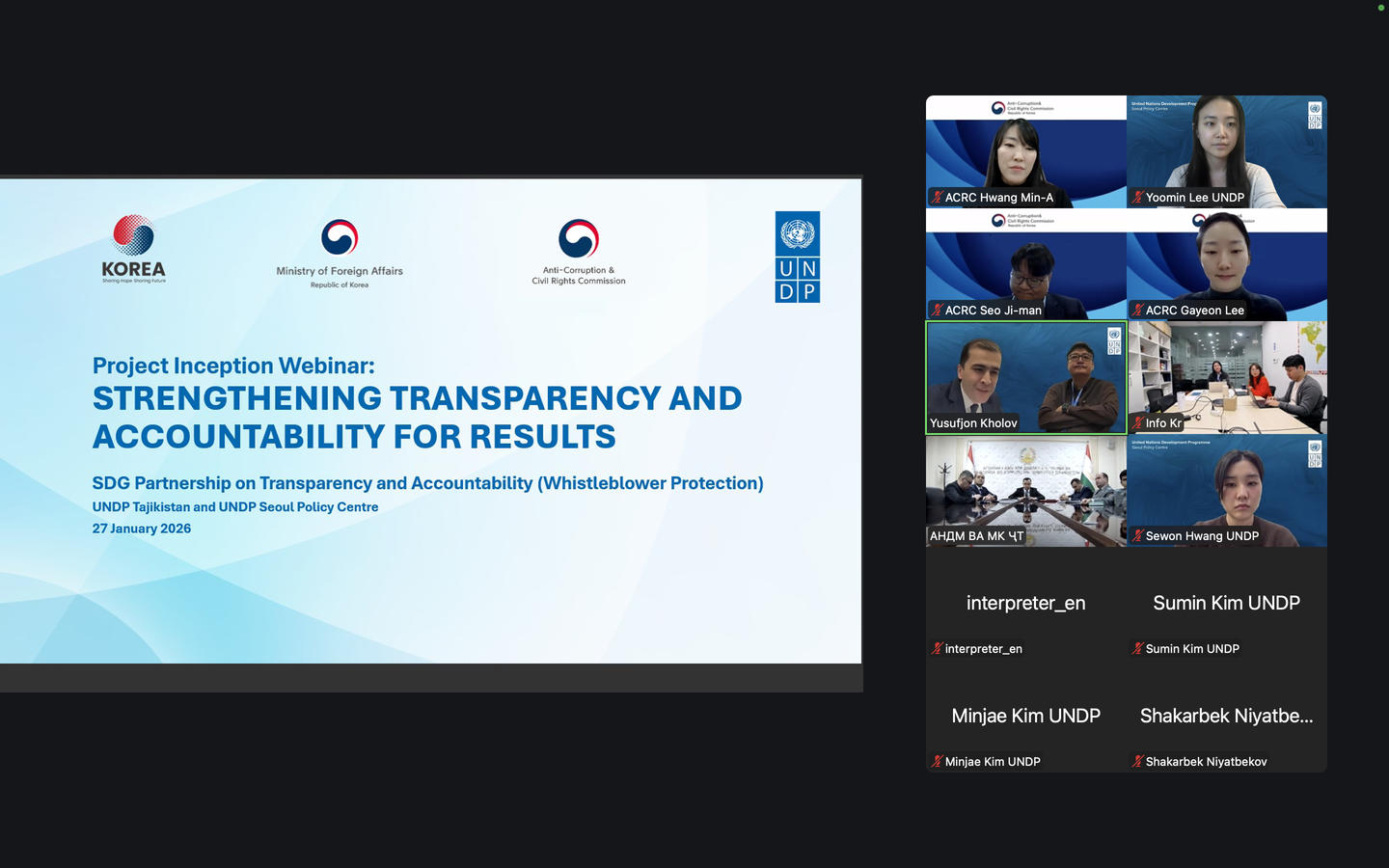
In Tajikistan, support is focused on laying the foundations for a national whistleblower protection framework. Working with the Anti-Corruption Agency, UNDP is supporting legal reforms, institutional strengthening and public awareness efforts. The initiative also seeks to establish dedicated oversight functions and strengthen engagement with media and civil society to build confidence in reporting systems.
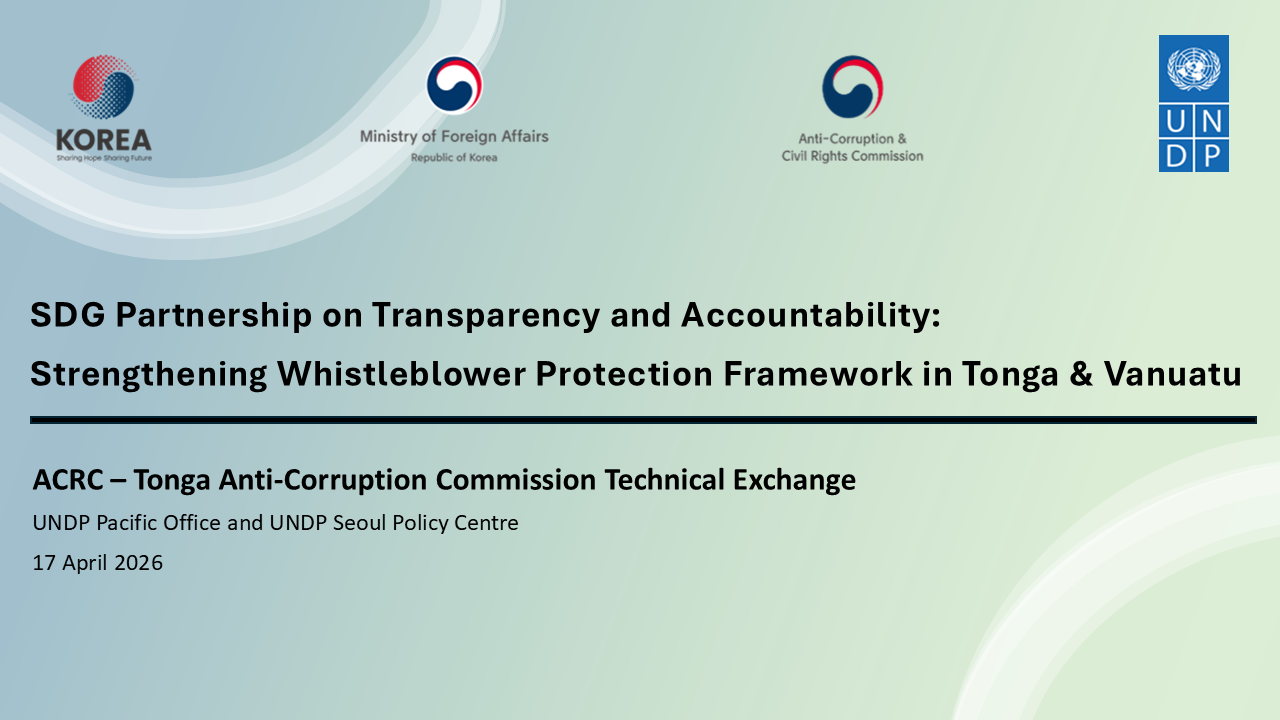
Across the Pacific, UNDP is helping Tonga operationalize its newly adopted Whistleblower Protection Act while supporting integrity reforms and peer learning in Vanuatu and other Pacific Island Countries. Together, these efforts are helping strengthen institutional capacity, increase public awareness and promote regional collaboration on whistleblowerprotection.
Picture Source: UNDP Seoul Policy Centre Zambia, Tajikistan and Tonga.
Building Trusted Channels to Report Corruption
For whistleblowers to come forward, reporting channels must be accessible, trusted and responsive. Even the strongest legal protections have limited impact if people do not know where to report corruption or lack confidence that their concerns will be handled effectively. UNDP therefore contributes to the development of the trusted, accessible, and secure reporting mechanisms that enable citizens to safely report wrongdoing and seek redress, in parntership with public institutions, oversight bodies and civil societies.
In Kosovo, UNDP supported the establishment of a digital reporting platform inspired by Korea’s Clean Portal model. The platform has expanded access to corruption reporting and strengthened institutional responsiveness. Between September 2025 and June 2026, 277 reports were submitted through the system, with more than 90 percent received throughthe online platform.
In Mongolia, UNDP supported the modernization of the national anti-corruption hotline through a new call centre system and improved digital case management. The reforms reduced average response times by 23 percent and reduced duplicate submissions by around 30 percent, helping authorities process reports more efficiently while improving the userexperience. Public awareness efforts also helped expand engagement with corruption reporting mechanisms.
Uzbekistan has combined digital innovation with legal reform. The upgraded E-Anticor.uz platform allows citizens to report corruption, track cases and access information on whistleblower protection. Complementing these digital reforms, whistleblower protection measures have also been incorporated into draft legislation. In the second quarter of 2026 alone, nearly 3,000 public appeals were received through the Anti-Corruption Agency’s reporting channels, demonstrating growing public engagement and trust in these mechanisms.
Taken together, these experiences point to a common lesson. People are more likely to report corruption when they trust that reporting channels are safe, accessible and responsive, and when institutions have the capacity to act on the information they receive.
As countries continue to strengthen their anti-corruption efforts, protecting those who speak up remains essential. By supporting both whistleblower protection frameworks and trusted reporting mechanisms, UNDP is helping create the conditions for corruption to be detected, addressed and prevented. In doing so, these efforts contribute to strongerinstitutions, greater accountability and increased public trust.
1 References to Kosovo shall be understood in the context of UN Security Council Resolution 1244 (1999).