
Public procurement is one of the largest areas of public expenditure in Sri Lanka, directly shaping the efficiency of service delivery and the trust citizens place in government. Until recently, the National Procurement Commission (NPC) relied on paper-based reporting and manual monitoring. Hundreds of public institutions submitted procurement plans and performance reports as hard copies, often late and incomplete.
This system was time-consuming, burdensome for institutions, and ineffective for real-time monitoring. It limited the NPC’s ability to ensure transparency, accountability, and value for money—principles that are critical in the aftermath of Sri Lanka’s recent economic crisis.
The Challenge
- Cumbersome manual workflows with delays and errors in reporting.
- Lack of diagnostics, tools and indicators to detect corruption vulnerabilities and mismanagement.
- No real-time visibility on procurement monitoring and progress across government institutions.
- Inconsistent data quality, making national-level analysis difficult.
- High staff workload for compiling, verifying, and analyzing paper-based reports.
- Limited public transparency on procurement outcomes.
The Intervention
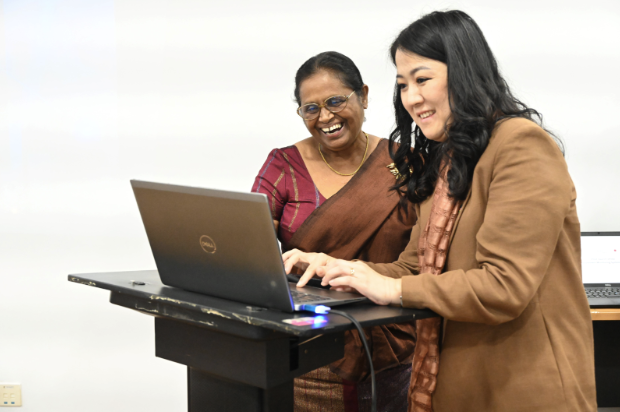
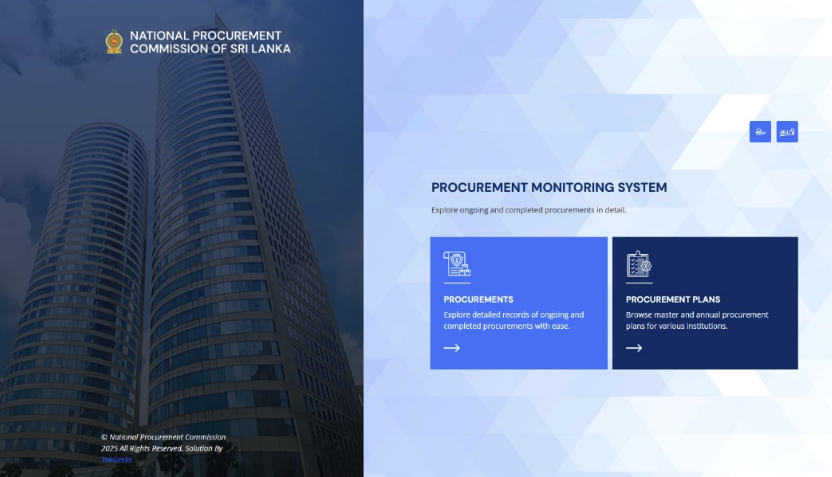
Recognizing these challenges, the NPC launched the e-Procurement Monitoring System (e-PMS) with the support of UNDP —a centralized, web-based digital platform designed to modernize procurement oversight.
Key features of the solution included:
- Digital submission of 3-year master procurement plans and annual procurement plans by all public institutions.
- Real-time dashboards for institutional users and Chief Accounting Officers to monitor progress.
- NPC-level oversight dashboards, offering a 360° view of procurement performance across ministries, departments, statutory bodies, and local authorities.
- Monitoring dashboards for senior officials in public authorities to monitor procurement related activities in their own institutions to obtain real-time information on procurement activities and possible shortcomings.
- Automated alerts for delays, non-compliance, or deviations from approved timelines.
- Audit trails and security features to ensure data confidentiality and accountability.
- Public disclosure modules, publishing approved reports and statistics to strengthen citizen trust.
- Capacity-building tools, including online training modules and digital procurement manuals for officers and prospective bidders.
The e-PMS was also designed with future integration in mind. It will connect seamlessly with the national e-Procurement platform under the Ministry of Finance (expected by 2026), allowing monitoring data to flow automatically without duplicating reporting requirements.
The Results
Within the first year of implementation, the NPC observed significant improvements:
- Time savings: Institutions will spend up to 40% less time preparing and submitting reports.
- Improved accuracy: Automated compliance checks will reduce errors and inconsistencies in reporting.
- Real-time monitoring: The NPC can track live procurement progress instead of waiting for quarterly reports.
- Reduced workload: NPC staff could now focus on analysis and investigations rather than routine data compilation.
- Greater accountability: Automated audit trails make every action traceable, discouraging malpractice.
- Increased transparency: Citizens and civil society will be able to access procurement statistics through the NPC’s website, strengthening trust in public spending.
The Way Forward
The e-PMS marks a turning point for Sri Lanka’s procurement governance. By combining transparency, efficiency, and digital innovation, the NPC has set a new benchmark on how public resources are managed. With planned integration into the Ministry of Finance’s e-Procurement System, Sri Lanka is on course to establish a fully digital, end-to-end procurement ecosystem that ensures every rupee spent delivers maximum value to the people.